
LLC vs Personal Ownership for Florida Luxury Investment Properties
Last Updated: August 2026
A Weston investor called me last month holding four properties in her own name. One tenant's fall on any of those properties could have reached all four, plus her personal accounts, plus her home. She had never asked a real estate attorney whether that was a problem. Most investors haven't. The llc vs personal ownership decision for Florida real estate rarely comes up until something forces it, a lender's question, an accountant's aside, or a lawsuit that never should have touched more than one property.
Quick Answer: Should You Hold Florida Investment Property in an LLC or Your Own Name?
For most investors with rental or investment property in Florida, an LLC is the stronger choice. It separates the property's liabilities from your personal assets and, for single-member LLCs, Florida law limits a personal creditor's remedy to a charging order rather than seizure of the LLC itself. Personal ownership is simpler but leaves your other assets exposed.
KEY TAKEAWAYS
- A properly maintained Florida LLC keeps a lawsuit against one investment property from reaching your personal accounts, home, or other properties.
- Florida's charging order protection extends to single-member LLCs, which is unusual nationally and matters for investors who hold property alone.
- Florida's new Protected Series LLC law, effective July 1, 2026, lets one entity hold multiple properties in separate compartments without forming a separate LLC for each one.
- Moving an existing mortgaged property into an LLC can trigger documentary stamp tax on the loan balance, and homestead protections do not follow the property once an LLC owns it.
- There is no single right answer. The decision depends on how many properties you hold, how you finance them, and whether you plan to keep them long term.
IN THIS GUIDE
- Why Ownership Structure Matters More Once You Own More Than One Property
- What an LLC Actually Protects, and What It Does Not
- Florida's New Protected Series LLC Law: What Changed in 2026
- The Real Costs of Moving a Property Into an LLC
- When Personal Ownership Still Makes Sense
- What This Looks Like for Weston and Southwest Ranches Investors
- Frequently Asked Questions
Why Ownership Structure Matters More Once You Own More Than One Property
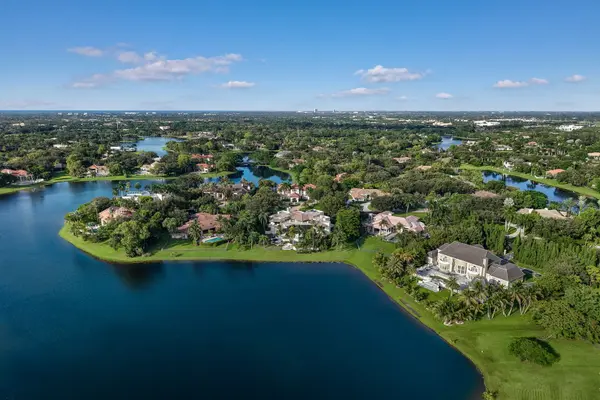
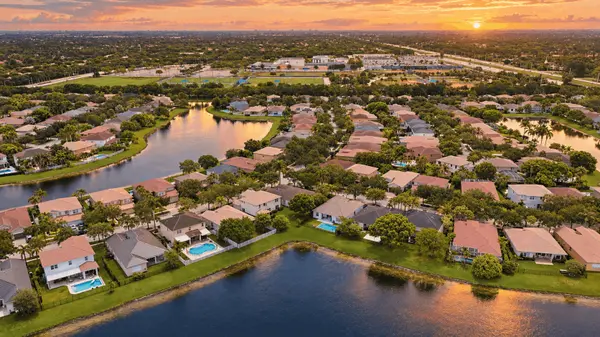
Honestly, most investors don't think about entity structure until they already own the second property. The first one goes in personally because it feels simpler, and it is, right up until something goes wrong. A single-family rental in Weston with one tenant carries a different risk profile than a small portfolio spread across Weston and Southwest Ranches, and the ownership decision should scale with the portfolio, not lag behind it.
Interest in Florida real estate from serious investors hasn't slowed, even with tighter financing conditions. International buyer dollar volume in Florida climbed to $10.4 billion in the year ending July 2025, up sharply from a multi-year low the year before, according to Florida Realtors' 2025 Profile of International Residential Transactions. Canadian buyers led that activity by dollar volume, and 90 percent of international purchasers visited Florida in person before closing. That's not a market cooling off. It's a market where more people are actively deciding how to hold title, often for the first time.
MARKET METRIC | FLORIDA (CURRENT) | YEAR-OVER-YEAR
| Market Metric | Florida (Current) | Year-Over-Year |
|---|---|---|
| International buyer dollar volume | $10.4 billion | Up from $7.1 billion the prior year |
| International buyer sales counts | Rose sharply | +50% |
| Buyers visiting Florida before purchase | 90% | 92% in 2022, 89% in 2021 |
| Leading buyer nation by dollar volume | Canada | Led by a significant margin |
Source: Florida Realtors, 2025 Profile of International Residential Transactions in Florida — November 2025
WHAT IS A CHARGING ORDER?
A charging order is a court remedy that lets a personal creditor collect distributions an LLC actually pays out to its owner, without giving the creditor any right to force a sale of the LLC's property or take over management. It's the legal wall between your personal debts and your LLC's assets.

What an LLC Actually Protects, and What It Does Not
A Florida LLC creates a legal barrier between the property it owns and everything else you own. If a tenant is injured on an LLC-owned property and sues, the lawsuit names the LLC. A judgment against that LLC can generally reach only the LLC's own assets, not your personal bank accounts, your home, or your other investment properties held in separate entities. That's the core protection, and it's the reason most serious Florida investors don't hold rental property in their own name.
What surprised me the first time a client asked about this is how differently Florida treats single-member LLCs compared to most other states. Florida extends charging order protection even to a one-owner LLC, meaning a creditor with a personal judgment against you can't seize the LLC's assets outright. Their only remedy is a charging order against future distributions (Source: Alper Law, Florida LLC Asset Protection, 2026), which is a far weaker position for the creditor than a direct claim on the property itself.
None of this works, though, if the entity isn't treated like one. Commingling personal and LLC funds, skipping an operating agreement, or ignoring basic recordkeeping are the fastest ways to hand a plaintiff's attorney an argument for piercing the LLC and reaching your personal assets anyway. If you are not sure whether your current properties are titled and maintained in a way that would actually hold up, an investor strategy consultation is a low-pressure way to find out before it matters.
An LLC does not protect a property from its own debt. If the LLC takes out a mortgage, that mortgage attaches to the property regardless of who owns the LLC. It also doesn't create tax magic on its own. A single-member LLC is a disregarded entity by default, meaning the income and expenses flow straight through to your personal return exactly as they would if you owned the property outright.
Florida's New Protected Series LLC Law: What Changed in 2026
This is the part of the conversation that's changed the most recently, and most investors I talk with haven't heard about it yet. Florida's Protected Series LLC law took effect July 1, 2026 (Source: The Florida Bar Journal, Florida's New Protected Series LLC Law, May 2026), allowing one parent LLC to create separate internal "series," each holding its own assets, its own liabilities, and its own liability shield.
WHAT IS A PROTECTED SERIES LLC?
A protected series LLC is a single Florida entity that can divide itself into multiple internal compartments, each holding a different property. If the required formalities are followed, separate records, separate bank accounts, distinct contracts, a lawsuit against one series generally cannot reach the assets held in another series or in the parent company.
Under the traditional approach, an investor with five properties would typically form five separate LLCs to keep liability compartmentalized, each with its own annual report fee, its own bank account, and its own operating agreement. For an investor with ten properties, that's ten filings and ten sets of records to maintain every year. A protected series LLC lets that same investor form one parent entity and create a series for each property instead, filing a single annual report and a single tax return while still keeping each property's liability separate from the others.
The tradeoff is that this structure is brand new in Florida. Banks, title companies, and insurance carriers haven't all caught up yet, and lenders may be slower to finance a property held in a series than one held in a standalone LLC. For an investor actively growing a portfolio in Weston and Southwest Ranches, it's worth a conversation with an attorney now, even if the right move today is still a standalone LLC per property.
The Real Costs of Moving a Property Into an LLC
From what I'm seeing, the entity decision itself isn't what trips investors up. It's the cost of moving an existing property into that entity after the fact. Each Florida LLC carries an annual report fee of $138.75 (Source: Florida Division of Corporations, Sunbiz.org, 2026), which is straightforward and predictable. What catches people off guard is the documentary stamp tax that can apply when you deed an already-owned property into your LLC.
If the property is unencumbered, there's no consideration involved in the transfer and generally no stamp tax due. If there's an outstanding mortgage, the Florida Department of Revenue treats that mortgage balance as consideration, even though no money changes hands in the transfer itself. At the standard rate of $0.70 per $100 of that balance, a property carrying a $300,000 mortgage would generate roughly $2,100 in documentary stamp tax simply to retitle it into an LLC.
There's a second cost that has nothing to do with dollars. Florida's homestead exemption and its Save Our Homes assessment cap apply only to natural persons living in the property as their primary residence (Source: EPGD Business Law, Homestead Exemption and Documentary Stamp Tax, 2024). Once an LLC holds title, that protection is gone entirely, which is exactly why this move makes sense for a rental property and almost never makes sense for the home you actually live in.
When Personal Ownership Still Makes Sense
One thing investors are sometimes surprised by is that I don't recommend an LLC for every situation. If you're buying a single property with a conventional mortgage and plan to occupy it, even part-time, personal ownership is usually simpler and preserves options like homestead protection that an LLC forfeits. Financing can also be a real factor. Some conventional lenders won't lend directly to an LLC, which pushes investors toward personal ownership followed by a later transfer, with the documentary stamp tax question above baked in from day one.
Personal ownership also avoids the ongoing administrative layer of an LLC entirely, no annual report, no separate bank account, no operating agreement to maintain. For an investor with a single, low-risk property and a strong personal umbrella insurance policy, that simplicity can outweigh the liability benefit, at least until the portfolio grows.
| Factor | LLC Ownership | Personal Ownership |
|---|---|---|
| Liability exposure | Contained to the LLC's assets | Personal assets directly exposed |
| Homestead eligibility | Not available | Available if owner-occupied |
| Ongoing administration | Annual report, separate accounts, records | Minimal |
| Conventional financing | Some lenders limit direct LLC loans | Broadest lender access |
| Best fit | Rental or investment property, growing portfolios | Owner-occupied primary residence |
What This Looks Like for Weston and Southwest Ranches Investors
Investors here tend to fall into one of two groups. The first already owns their primary residence in Weston or Southwest Ranches and is adding a second property purely as an investment. For that group, an LLC on the new property, kept entirely separate from the personal residence, is almost always the right starting point. The second group is converting a property they used to live in into a rental, often after moving into a larger home nearby. That's the exact moment homestead protection quietly disappears if the conversation about entity structure hasn't happened yet, and it's worth having before the tenant moves in, not after.
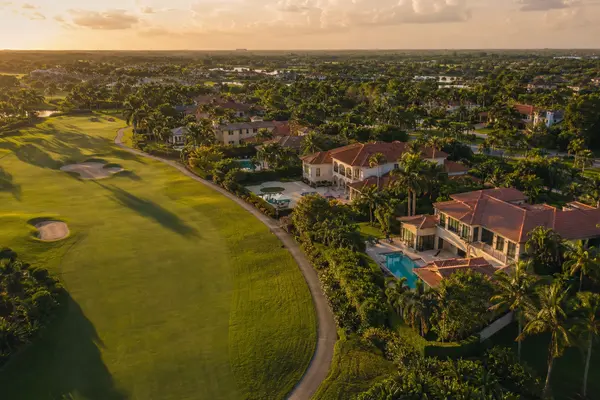
Southwest Ranches investors with multiple acreage or equestrian properties are a natural fit for the new series LLC structure once title companies and lenders are more comfortable with it. For now, most of the portfolios I'm seeing here still use one LLC per property, and that remains a sound, proven approach.
Frequently Asked Questions
Should I buy investment property in an LLC in Florida?
For most rental or investment properties, yes. An LLC separates the property's liabilities from your personal assets, and Florida's charging order protection applies even to single-member LLCs. A primary residence you'll live in is usually the exception.
Is an LLC better than personal ownership for liability protection?
Generally yes, for anything you're renting out or holding purely as an investment. A properly maintained LLC keeps a lawsuit tied to one property from reaching your other assets, provided you avoid commingling funds and keep the entity's formalities intact.
Does an LLC protect my personal home if my rental property gets sued?
Yes, as long as the rental property is titled in the LLC's name and you haven't personally guaranteed its debts in a way that creates separate exposure. Keeping the LLC's finances entirely separate from your personal accounts is what makes this protection hold up.
What is Florida's charging order protection and why does it matter for investors?
It limits a personal creditor's remedy against your LLC to a charging order against distributions, rather than allowing them to seize the LLC's property outright. Florida extends this to single-member LLCs, which is a meaningful advantage for investors who hold property alone.
Do I have to pay tax to move an existing property into my LLC?
If the property is unencumbered, typically no. If it carries a mortgage, Florida's documentary stamp tax applies to the loan balance at $0.70 per $100 *(Source: [Florida Department of Revenue, Documentary Stamp Tax](https://floridarevenue.com/taxes/taxesfees/Pages/doc_stamp.aspx), 2026)*, which can add up to a real cost on a heavily financed property.
Can foreign investors use an LLC to buy Florida real estate?
Yes. Many foreign investors use a Florida LLC specifically for the liability protection and management flexibility it offers, alongside separate planning for FIRPTA and U.S. estate tax exposure with a qualified cross-border tax professional.
What is Florida's new Protected Series LLC law?
Effective July 1, 2026, it allows one parent LLC to create separate internal series, each with its own assets and liability shield, reducing the filing and banking overhead of forming a new LLC for every property in a growing portfolio.
Who is Denice Landaeta?
Denice Landaeta is a luxury real estate advisor and founder of Dluxuss Group in Weston, Florida, ranked #139 nationally on the RealTrends and Wall Street Journal America's Best list and a NAHREP Top 100 Latino Agent nationally for four consecutive years.
The right ownership structure for your next property depends on how many you already hold, how they're financed, and where you're headed over the next few years, not on a one-size-fits-all rule. If you'd like to walk through how your current properties are titled and whether a change makes sense, Denice is available for a private investor strategy consultation.
ABOUT THE AUTHOR
Denice Landaeta is a top-ranked luxury real estate agent in Weston, Florida, and the founder of Dluxuss Group, a luxury, business, and commercial real estate boutique within the Coldwell Banker Global brand. With 15 years of experience as a real estate business developer and franchise professional, She has closed more than 800 transactions in the last eight years across Weston, Southwest Ranches, Parkland, and South Florida.
Denice ranks #139 nationwide on the RealTrends and The Wall Street Journal America's Best list and is a NAHREP Top 100 Latino Agent nationally for four consecutive years, reaching #32 in 2023 out of 28,000 nominated agents. She is a Coldwell Banker Top Producer since 2013, a President's Circle member, and holds the CLHMS, Million Dollar GUILD, and Global Luxury Specialist designations, credentials that place her among the top luxury real estate specialists in South Florida.
Denice is active in her community, having awarded scholarships to local high school seniors and supported the Ronald McDonald House Charities of Miami.
Licensed Realtor® · Florida License #SL3364483 · Coldwell Banker Realty
Categories
Recent Posts






"My job is to find and attract mastery-based agents to the office, protect the culture, and make sure everyone is happy! "